
What to Eat When Your IBS Is Flaring
If you have IBS, then you know what it feels like to have a flare-up. Life is going along, your digestion is running smoothly, and then suddenly, bloating, gas, constipation, or diarrhea set in. You may not know what triggered it, but now it feels daunting to know what to eat, because you don’t want to make things worse.
But as a dietitian who has IBS, I’m here to let you know this flare-up is temporary. You don’t need to stop eating; you just need to simplify your diet and go back to basics. When my IBS flares, I focus on eating nourishing, simple foods to get back to feeling good again. In this post, I will share simple, gentle meal ideas so you know what to eat when your IBS is flaring.
What Happens During an IBS Flare
Irritable bowel syndrome, or IBS, is a functional gut disorder of the gut-brain axis. The gut-brain axis is a bidirectional loop of nerves between the Enteric Nervous System and the Central Nervous System. This means that stress can cause digestive symptoms such as bloating, gas, abdominal pain, constipation, or diarrhea. On the flip side, your digestive symptoms can send signals to the brain that can trigger depression or anxiety.
Certain foods can trigger IBS symptoms as well as stress, as mentioned previously. Eating foods that are less likely to trigger symptoms will help calm your digestive system.
Watch the Video
The Journey to Figuring Out My Triggers
When my symptoms were at their worst, I knew something had to change, but I had no idea where to start. I spent about three to four months going through an elimination diet process that was slow, restrictive, and honestly pretty frustrating. But it was also one of the most worthwhile things I’ve ever done for my health.
I started with the Paleo diet, which emphasizes whole, unprocessed foods and excludes grains, legumes, and dairy. I noticed a real difference: more energy, less bloating, and fewer bad days overall. But not all of my symptoms went away. Something was still off.
That’s when I layered in the Low FODMAP diet, and things really started to click. Following a Paleo Low FODMAP approach meant I was eliminating most of the common gut irritants at once, giving my digestive system a real chance to settle down. I wasn’t perfect — and I want to be honest about that — but I did the best I could, and that was enough to start healing.
After a few months, I began the slow process of reintroducing foods one at a time. That’s when I identified my main triggers: onions, garlic, beans, and wheat. All of these contain fructans, a type of fermentable carbohydrate that can wreak havoc on sensitive guts. I’d also known for years that lactose was a problem for me, so dairy was mostly off the table, but I’ve found I can handle small amounts of cheese without too much trouble.
It’s a process that requires patience, and it looks different for everyone. But the payoff of finally understanding your own body was completely worth it.
The One Thing I Always Reach for First
Before we get to meals, I have to talk about ginger tea.
This is my number one staple for flare-ups. When my gut is unhappy, a warm mug of ginger tea is the first thing I make. Ginger has natural anti-inflammatory properties and has long been used to ease nausea and support digestion — and from personal experience, it genuinely soothes things down. I’ll often sip it slowly in the morning before I eat anything, or in the evening as I wind down for the night.
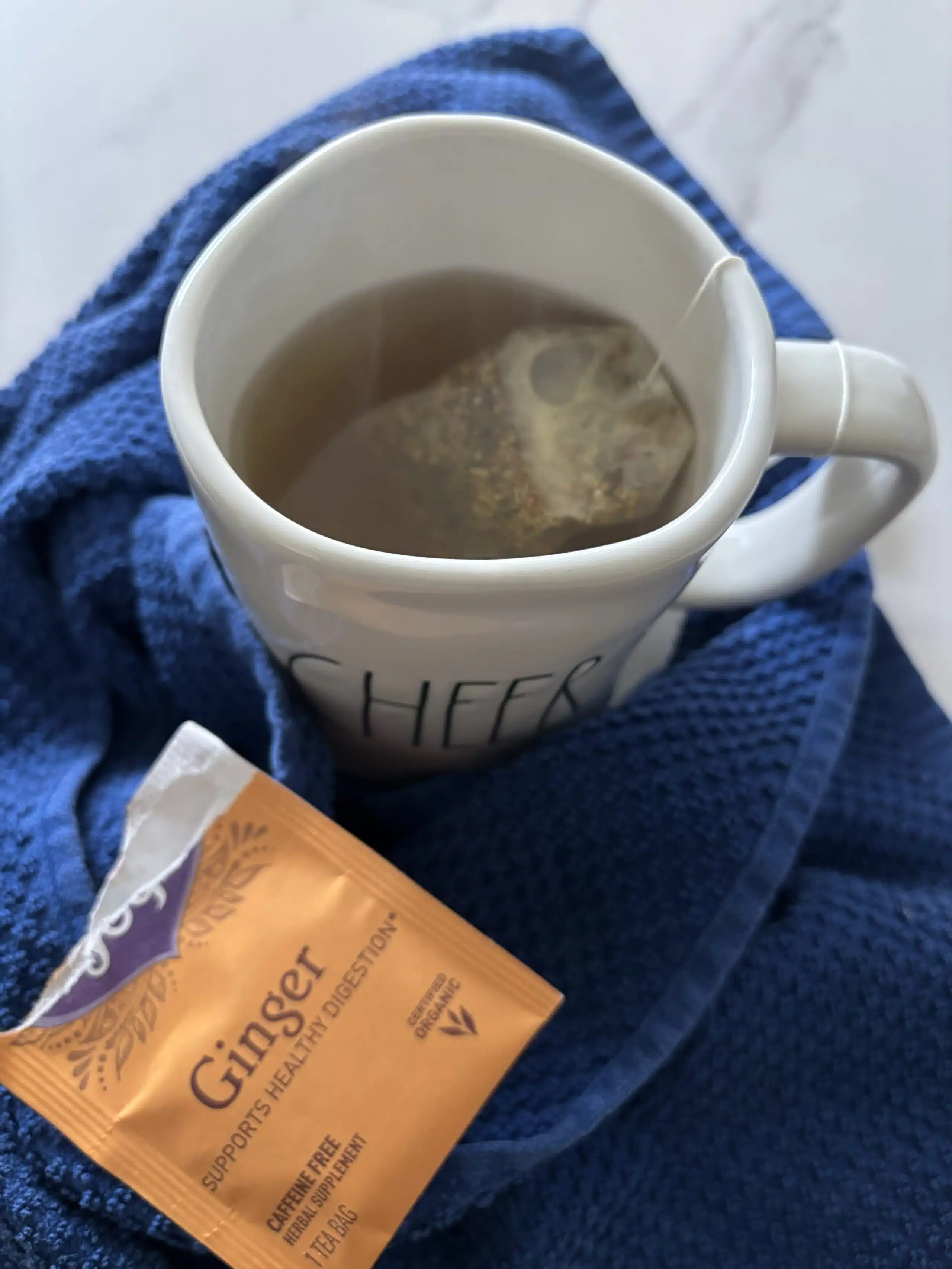
If you don’t already have ginger tea in your pantry, consider this your sign to go get some. If you’re not a fan of ginger tea, peppermint tea is another good option.
What I Actually Eat During a Flare
My golden rule during a flare is: keep it simple. This is not the time for adventurous cooking or trying new recipes. It’s the time for foods your body already knows and trusts.
Here’s how I break it down:
Lean Protein First
I focus every meal around a simple protein — usually chicken, fish, or turkey. These are easy to digest, gentle on the gut, and keep me satisfied without adding any extra stress to my system. I’ll often bake or stir-fry them with nothing more than a little olive oil and a pinch of salt and pepper.
Go Easy on the Grains
Here’s something that surprised me when I first started paying close attention: as someone with IBS-C (the constipation-dominant type), rice and bread can actually slow my digestion down even further. That’s the opposite of what you want during a flare if you suffer from constipation. So while many IBS resources suggest plain white rice as a safe option, I personally limit it — and skip bread altogether when I’m not feeling well.
However, if you have IBS with diarrhea, adding white rice to your meals may help slow digestion and absorb extra water in your gut.
If I want a small portion of something starchy, I’ll opt for quinoa or potatoes, which seem to sit better with me.
Low FODMAP Fruits
Fruit feels like a treat even during a flare, and there are some great low FODMAP options that are gentle and nourishing. My favorites are kiwi and blueberries. Kiwi, in particular, is something I’ve come to love — research shows it helps with gut motility, which is a bonus for those of us with IBS-C.
Simple, Comforting Vegetables
I keep my vegetable choices to ones I know work well for me: green beans and zucchini are my go-tos. They’re mild, easy to cook, and don’t cause the bloating that higher FODMAP vegetables can. I’ll steam or sauté them simply — no garlic, no onion, just a little olive oil and maybe some dried herbs such as oregano or thyme.
Core Principles for Eating During a Flare
While everyone’s IBS is different, there are some general guidelines that tend to work well for most people during a flare. Think of these as a helpful framework to come back to when you’re not sure where to start.
1. Choose Simple Proteins
Protein is generally well-tolerated and supports satiety without placing extra stress on your digestive system. Good options include:
- Chicken
- Turkey
- Eggs
- Fish
- Firm tofu (if tolerated)
2. Choose Easy-to-Digest Carbohydrates
The goal here is to provide energy without causing excessive fermentation in the gut. Stick to gentler options like:
- White rice
- Potatoes
- Quinoa (moderate portion)
- Sourdough bread (if tolerated)
- Oats (in tolerated portions)
3. Lower Fat Temporarily
High-fat meals can worsen symptoms during a flare, so this is a good time to keep things lighter. That means:
- Avoiding very heavy, fried, or creamy meals
- Sticking to moderate portions of healthy fats like olive oil
4. Reduce High FODMAP Triggers (Temporarily)
Even if you haven’t identified your personal triggers yet, temporarily reducing high FODMAP foods during a flare can give your gut some breathing room. Common culprits to scale back on include:
- Onion and garlic
- Large servings of beans
- Large salads
- Cauliflower
- Large portions of sweet potato
Note: This isn’t about eliminating these foods forever — many of them are nutritious and can be reintroduced once symptoms settle. It’s simply about giving your gut less to work with while it heals.
A Sample Flare-Up Day of Eating
To give you a practical idea of how this all comes together, here’s what a gentle eating day might look like for me:
- Morning: Ginger tea, then a small bowl of blueberries and coconut milk yogurt.
- Lunch: Baked chicken breast with steamed green beans and a small portion of quinoa
- Snack: A kiwi or a small handful of blueberries
- Dinner: Simply cooked salmon or white fish with sautéed zucchini in olive oil
Nothing fancy. Nothing complicated. Just foods that I know my body can handle.
A Final Reminder
Flares are emotionally and physically difficult. There’s a grief that comes with not being able to eat “normally,” especially when food is something you love. Give yourself grace during those times. Eating simply isn’t a punishment; it’s a form of care.
And if you haven’t yet identified your own triggers, I really encourage you to explore the Low FODMAP diet with the support of a dietitian specializing in gut health. Understanding what your body responds to changed everything for me, and it can for you, too.
Want a Step-by-Step Plan for Your Next Flare?
If this post resonated with you, I think you’ll love my IBS Flare-Up Rescue Guide — a gentle, practical ebook I created to help you feel less lost and more in control when a flare hits.
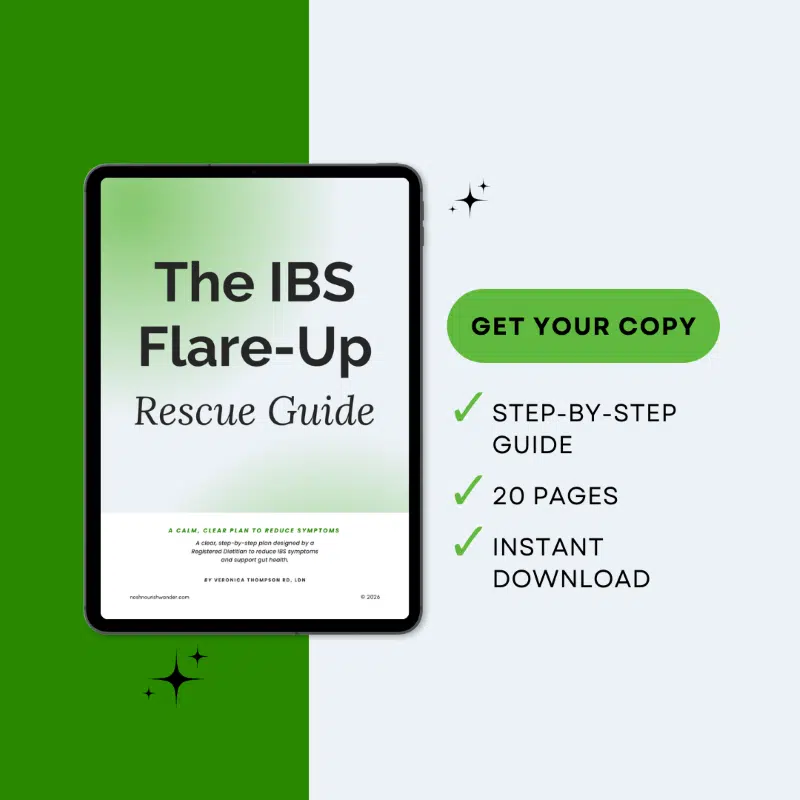
Inside, you’ll find:
- A 24–48 hour flare protocol — a simple, step-by-step plan so you always know what to do
- A clear “what to eat” food list organized by category, so there’s no guesswork
- A 24-hour sample calm gut meal plan that’s reassuring and totally doable
- Tips on what to avoid temporarily (without being overwhelming!)
- IBS flare soothers — simple tools to help calm your body fast
- A section on emotional relief, because your body is not broken, and you deserve that reminder
When you’re in the middle of a flare, the last thing you want to do is research. This guide does the thinking for you, so you can just focus on resting and healing.
👉 Grab the IBS Flare-Up Rescue Guide here
You deserve to feel better — and you don’t have to figure it out alone. 🌿
Are you navigating IBS flares? I’d love to hear which gentle foods have helped you—share in the comments below!
