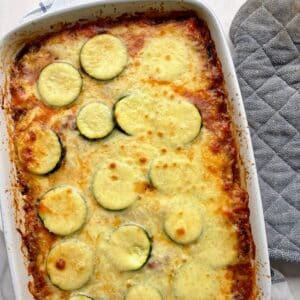
Ground Beef and Zucchini Casserole

This Ground Beef and Zucchini Casserole is packed with protein, vegetables, and delicious cheese while being gluten-free and low FODMAP!
Ingredients
- 1 cup quinoa dry
- 2 cups chicken broth low FODMAP or use water
- 1 pound ground beef 90% lean
- 2 medium carrots peeled and diced
- 2 medium zucchini sliced into ¼-inch rounds
- 2 cans (14.5 ounces) diced tomatoes
- 1 tablespoon tomato paste
- 1 teaspoon dried oregano
- 1 teaspoon dried basil
- 1 teaspoon dried thyme
- ¾ teaspoon salt
- ½ teaspoon ground black pepper
- ¾ cup cottage cheese or lactose-free cottage cheese
- 1½ cups shredded mozzarella
- 2 tablespoons grated parmesan cheese
- ¼ cup chopped fresh basil for garnish (optional)
Instructions
- Preheat your oven to 375°F (190°C). Lightly grease a 9x13-inch baking dish.
- In a medium pot, bring 2 cups of chicken broth or water to a boil. Add 1 cup of dry quinoa, reduce heat to low, cover, and simmer until all liquid is absorbed, about 15 minutes. Fluff with a fork and set aside.
- Heat 1 tablespoon of garlic-infused olive oil in a large skillet over medium heat. Add the diced carrots and cook for about 5 minutes until slightly softened. Add the ground beef, season with ¾ teaspoon salt and ½ teaspoon black pepper, and cook for 5-7 minutes until browned. Stir in 1 tablespoon tomato paste, the diced tomatoes, oregano, basil, and thyme and let simmer for 5 minutes to develop the flavors.
- Slice the zucchini into ¼-inch rounds. In a separate pan, heat the remaining tablespoon of garlic-infused olive oil and lightly sauté the zucchini for 2-3 minutes until just tender. Set aside.
- Stir the cooked quinoa into the beef and tomato mixture, ensuring it's well coated in the sauce. This will enhance the flavor and keep the casserole moist.
- Spread half of the beef and quinoa mixture evenly in the bottom of the prepared baking dish. Layer half of the zucchini slices on top. Dollop all of the cottage cheese and spread evenly over the zucchini. Repeat the layers of remaining beef mixture and zucchini.
- Sprinkle 1½ cups of shredded mozzarella cheese evenly over the top, then finish with two tablespoons of parmesan cheese. Cover with foil and bake for 25 minutes. Remove the foil and bake for another 10-15 minutes, until the cheese is golden and bubbly.
- Remove the casserole from the oven and let it cool for 5-10 minutes before serving. Top with fresh basil if desired.
Notes
Refrigeration: Store in an airtight container for up to 4 days.
Reheating: If thawed, reheat in the oven at 350°F (175°C) for 20-25 minutes or until warmed through. If reheating from frozen, cover with foil and bake for 40-45 minutes, removing the foil for the last 10 minutes to crisp up the cheese.
Low FODMAP Information
I carefully created this beef zucchini casserole using information from the Monash University Low FODMAP App to ensure it is gut-friendly for those with IBS. Each ingredient was selected to keep FODMAP levels in check while still delivering a delicious and nourishing meal. Everyone’s tolerance to FODMAPs is different, so I always recommend adjusting ingredients to fit your individual needs. If you’re unsure about certain foods, refer to the Monash University Low FODMAP App to check portion sizes and modifications that work best for you.Nutrition
Calories: 287kcalCarbohydrates: 19gProtein: 23gFat: 13gSaturated Fat: 6gPolyunsaturated Fat: 1gMonounsaturated Fat: 4gTrans Fat: 0.4gCholesterol: 59mgSodium: 721mgPotassium: 560mgFiber: 3gSugar: 3gVitamin A: 2911IUVitamin C: 10mgCalcium: 177mgIron: 3mg
Tried this recipe?Let us know how it was!